A cosmetics workshop in the 19th arrondissement
Founded in 2018, Atelier Populaire has its own facilities at 134 rue d'Aubervilliers in Paris. A dedicated team makes our cosmetics there. The business began with superfatted cold-process soaps, Les Pavés de Paris, before expanding into other textures and everyday uses.
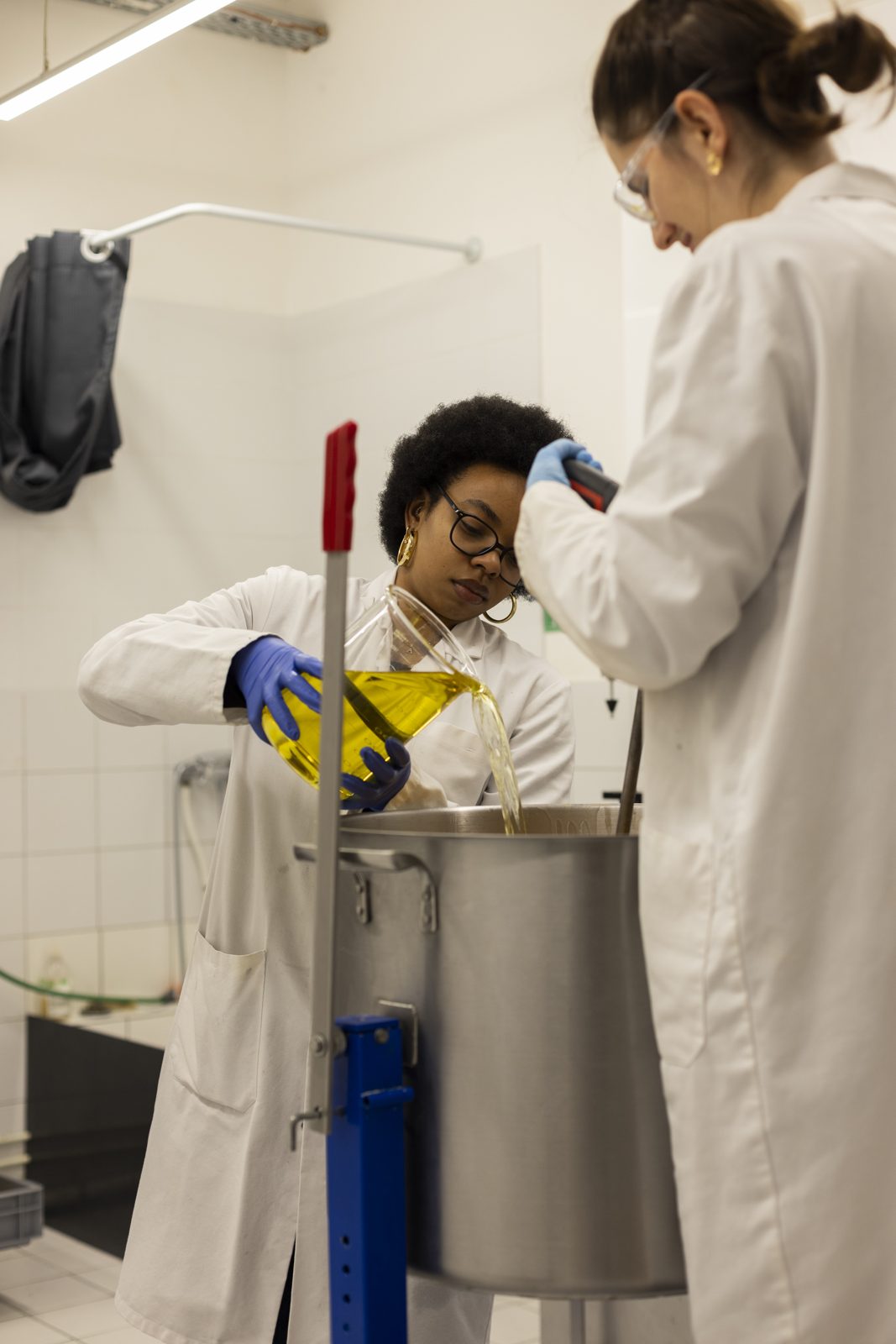
The word “manufacture” describes a working production space. Formulas are developed there, products are made there, and the finished cosmetics are filled and packed on site. Packaging design and communication are also part of the work carried out in the same place. Several disciplines therefore come together around each product, from the first idea to its final presentation.
- Formulate
- Make
- Pack
Soap: pouring, cutting and stamping
We use the cold-process method for our soaps. The soap mixture is prepared and poured into moulds. The bars are then cut and stamped by hand before their drying period. The finished bar you hold is the result of a sequence of practical steps, as well as choices about its formula, shape and packaging.
Le Bleu, the original Pavé de Paris is one example from this family. Our cold-process soap article, available in French explains the method in more detail. When choosing a bar, also compare the fragrance, ingredients and size on the individual product pages.
Different textures beyond the soap bar
Our Paris-made cosmetics extend beyond soap to solid deodorants, massage oils, whipped shea butter and cleansing oil. A balm taken from a tin, an oil poured from a bottle and a soap worked into a lather invite different gestures. Their shared place of manufacture does not mean they all use the same production method.
Neutre whipped shea butter shows the work behind a whipped texture. Our cleansing oil is a liquid formula designed to turn milky when mixed with water. These products are not made by saponification simply because they come from a workshop that also makes soap.
Keep manufacturing origin and labels separate
Making a cosmetic in Paris does not mean that every raw ingredient was grown in the city. The location of production, the origin of the ingredients and certification are separate pieces of information. Accessories offered in the shop also have their own manufacturing details, which you can check on their product pages.
Les Pavés de Paris received the “Fabriqué à Paris” label, as recorded in our French article about the award. That recognition relates to the products concerned. It does not replace organic-certification information and should not automatically be extended to every new reference in the catalogue.
Explore the products through your routine
For an everyday washing product, compare Les Pavés de Paris. For other parts of your routine, explore the solid deodorants, whipped shea butters or cleansing oil. Each product page gives the details of the item you will actually use, rather than asking you to choose on origin alone.
A manufacturing location tells you something useful about where a finished cosmetic comes from. Still take time to read its ingredients, directions and precautions. Connecting those details with your everyday habits helps make the work behind a product relevant to your own choice.